
Best air purifiers for allergies in 2026
The best air purifiers for allergies feature a True HEPA filter and a Clean Air Delivery Rate (CADR) appropriate for your room size, with top models including the
Blueair Blue Pure 311i Max, Coway Airmega AP-1512HH Mighty, Hitekon Cleair 230 Air Purifier,and Honeywell HPA300. Allergists recommend using them as a helpful tool for managing indoor air quality.
Top Air Purifiers for Allergies
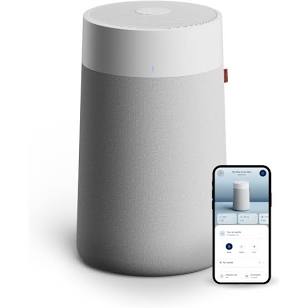
- Performance: CNET’s best overall pick for its balanced performance, effectively clearing smoke particles, with an average T90 (time to clear 90% of particles) of 1 minute and 28 seconds.
- Features: It uses HEPASilent technology, which combines electrostatic and mechanical filtration to capture allergens quietly and efficiently. It is energy-efficient and has smart features, including an auto mode and voice commands.
- Noise Level: Very quiet, operating at 34.84 dBA on its lowest setting, making it suitable for bedrooms.
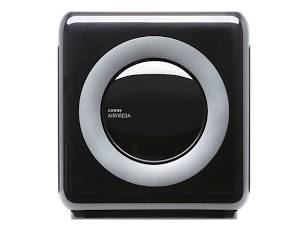
Coway Airmega AP-1512HH True HEPA Air Purifier With Air Quality Monitoring, Auto Mode, Timer, Filter Indicator, Eco Mode
- Performance: A popular and highly-rated choice among consumers and experts for its effectiveness in removing dust, pollen, and pet dander. It was the fastest model at removing air pollutants in one test.
- Features: Features a four-stage filtration system including a washable pre-filter, a True HEPA filter, and an activated carbon filter for odors. It includes an air quality indicator and an Eco mode to save energy.
- Portability: Considered an excellent portable option, making it easier to move between rooms.
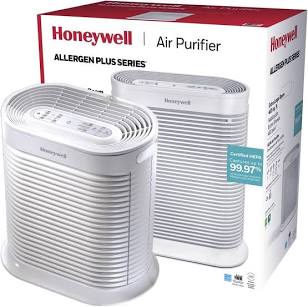
Honeywell HPA300 HEPA Air Purifier
- Performance: Rated by RTINGS.com as the best for large rooms, delivering remarkably high clean air and doing a fantastic job of trapping small airborne allergens.
- Features: It utilizes a two-stage system with a carbon pre-filter and three separate HEPA filters. It’s a simple device with easy-to-use controls but lacks Wi-Fi connectivity and an onboard particle sensor.
- Considerations: It is one of the louder models on high settings and its filters are not washable, requiring periodic replacement.
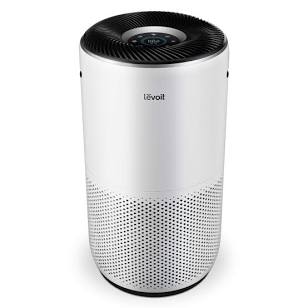
Levoit Core 400S Smart H13 HEPA Air Purifier
- Performance: Offers good overall cleaning performance for medium to large rooms up to 403 square feet, capturing 99.97% of airborne particles.
- Features: Includes smart features such as a laser dust sensor for real-time air quality updates, automatic fan speed adjustment, and app control via the VeSync app. It is 100% ozone-free, which is safer for those with respiratory issues.
- Noise Level: Quiet enough for a bedroom with a 24dB sleep mode setting.
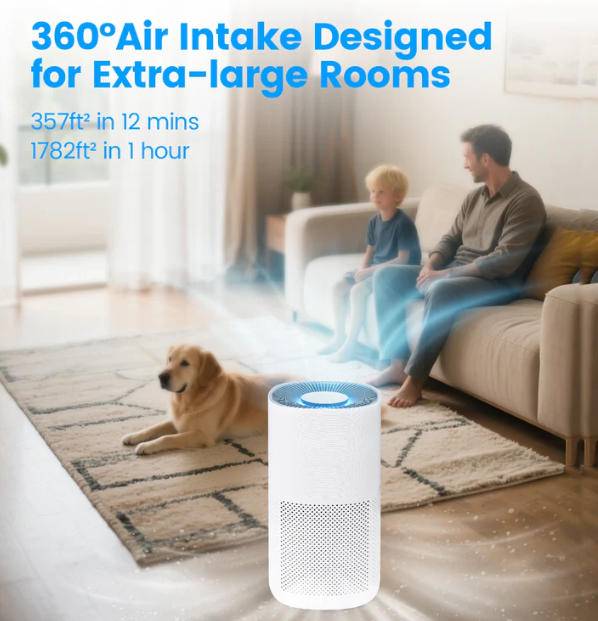
Hitekon Cleair 230 Air Purifier
The Hitekon Cleair 230 air purifier is a great solution for large rooms. It has a 3-stage filtration system that captures up to 99.97% of airborne pollutants, including small particles like dust and pollen. The smart auto mode adjusts the fan speed according to the air quality, and the sleep mode is super-quiet at 24dB, making it perfect for baby rooms. The energy-efficient air purifier has a timer that allows you to choose between 2-4-8 hours before it automatically turns off to conserve energy. It also features a filter replacement indicator and child-lock feature.
Key Features for Allergy Sufferers
When selecting an air purifier for allergies, focus on these critical features:
- True HEPA Filter: This is the gold standard for allergy relief, as these filters are certified to capture at least 99.97% of airborne particles as small as 0.3 microns, including pollen, dust mites, pet dander, and mold spores.
- Appropriate Room Coverage: Ensure the purifier’s capacity (often indicated by its Clean Air Delivery Rate or CADR) matches the size of the room where you plan to use it for optimal effectiveness.
- Low Noise Operation: A quiet unit is crucial if you plan to use it in a bedroom or office. Many effective models offer specific “sleep” or “quiet” modes.
- Activated Carbon Filter: While not for particles, this secondary filter is essential if you also want to manage odors, smoke, and volatile organic compounds (VOCs) that can trigger sensitivities.
Air Purifiers FAQ
1. Do air purifiers work to reduce allergies?
Yes, air purifiers are highly effective at reducing allergy symptoms, provided you choose the right one and use it correctly.
- How they work: Air purifiers pull air through a filter to trap particles. For allergy sufferers, the critical component is a True HEPA (High-Efficiency Particulate Air) filter. These capture 99.97% of particles as small as 0.3 microns.
- What they remove: In the context of Singapore and general allergies, a good air purifier will remove:
- Dust mite debris: A major trigger in Singapore’s humid climate.
- Pollen: Though less seasonal than in temperate countries, imported flowers and plants can still trigger hay fever.
- Pet dander: Dead skin cells and saliva proteins from cats and dogs.
- Mold spores: Common in humid HDBs and condos.
- Haze particles: Crucial for Singapore during the PSI spikes from September to November.
- Limitations: Air purifiers only clean airborne particles. They cannot remove allergens that have already settled on carpets, beds, or sofas. Therefore, they work best when combined with vacuuming (ideally with a HEPA vacuum) and dusting.
2. Should I get a humidifier or air purifier for allergies?
You should almost certainly get an air purifier.
Here is the specific reasoning for the Singapore climate:
- The Humidity Problem: Singapore is naturally humid (often 60%–90%+). Allergens like dust mites and mold thrive in moisture. Adding a humidifier increases the moisture in the air, which can actually make dust mite and mold allergies worse.
- The Role of the Air Purifier: An air purifier removes the allergens (dust mite feces, mold spores) from the air so you don’t breathe them in.
- The “Dry Air” Exception: The only time you might need a humidifier is if you run your air conditioning 24/7, which dries out the air significantly. If you have dry skin/sinuses and allergies, you could run an air purifier for the allergens and a small humidifier for comfort—but generally, dehumidification (removing moisture) is a better strategy for allergy sufferers in Singapore than humidification.
Verdict: Buy the Air Purifier first. If your allergies are severe and caused by dust mites, consider a Dehumidifier as your second purchase, not a humidifier.
3. Which air purifier is best for allergies in Singapore?
When shopping in Singapore, look for “True HEPA” (H13 or H14) filters and a high Clean Air Delivery Rate (CADR).
Here are the top recommendations based on performance, maintenance costs, and suitability for Singapore homes:
A. The Best Overall (Reliable & Auto-Sensing)
Philips Air Purifier Series 3000 (Model AC3033 or AC3037)
- Why it wins: This is widely considered the gold standard for Singapore apartments. It features “AeraSense” technology, which accurately detects PM2.5 levels (perfect for haze days) and allergens, automatically adjusting the fan speed.
- Allergy Benefits: The HEPA filter captures ultra-fine particles, and the pre-filter catches large dust and pet hair.
- SG Context: It is powerful enough for a standard bedroom or medium-sized living room.
B. The Best Budget Option
Xiaomi Smart Air Purifier 4 Pro (or 4 Lite)
- Why it wins: Xiaomi offers incredible value. The 4 Pro has a very high Clean Air Delivery Rate (CADR), meaning it cycles air faster than many competitors in the same price range.
- Allergy Benefits: It utilizes a True HEPA filter.
- SG Context: Excellent for tech-savvy users who want to control it via their phone. The filters are affordable and easy to replace at local Xiaomi service centers or online shops like Shopee/Lazada.
C. The Best for Haze & Large Rooms
Sharp Plasmacluster Air Purifier (Model FU-G50M or FP-J60E)
- Why it wins: Sharp is a veteran in the air purifier market. Their “Plasmacluster” ion technology is designed to neutralize mold spores and viruses in addition to filtering them out.
- Allergy Benefits: Highly effective against mold, which is a common issue in humid Singapore bathrooms and bedrooms.
- SG Context: These machines are built to last and are very effective during the haze season due to high airflow processing.
D. The Premium / Aesthetic Choice
Dyson Purifier Cool TP07
- Why it wins: It serves a dual purpose: it is a bladeless fan and an air purifier. It looks sleek and fits modern home decor.
- Allergy Benefits: It removes 99.97% of allergens and pollutants.
- Downside: It is expensive, and because the filter is integrated into a loop, it may require slightly more frequent replacement in very dusty environments compared to the chunky Philips or Sharp canisters.
Summary Recommendation
- For most HDB/Condo bedrooms: Get the Philips Series 3000 (AC3033). It is the “set it and forget it” solution that handles Singapore’s daily dust and seasonal haze perfectly.
- For tight budgets: Get the Xiaomi Air Purifier 4 Pro.
- For mold concerns: Get a Sharp Plasmacluster model.