
Smart Floor Fan: The Ultimate Cooling Solution for Your Home
Smart floor fans offer a practical blend of power, efficiency, and convenience tailored for modern living. This guide provides professional, user-focused insights to help homeowners choose, use, and maintain smart floor fans effectively while considering regional needs. We’ll cover features, energy considerations, room-by-room use cases, setup tips, and practical buying guidance.
Why a Smart Floor Fan
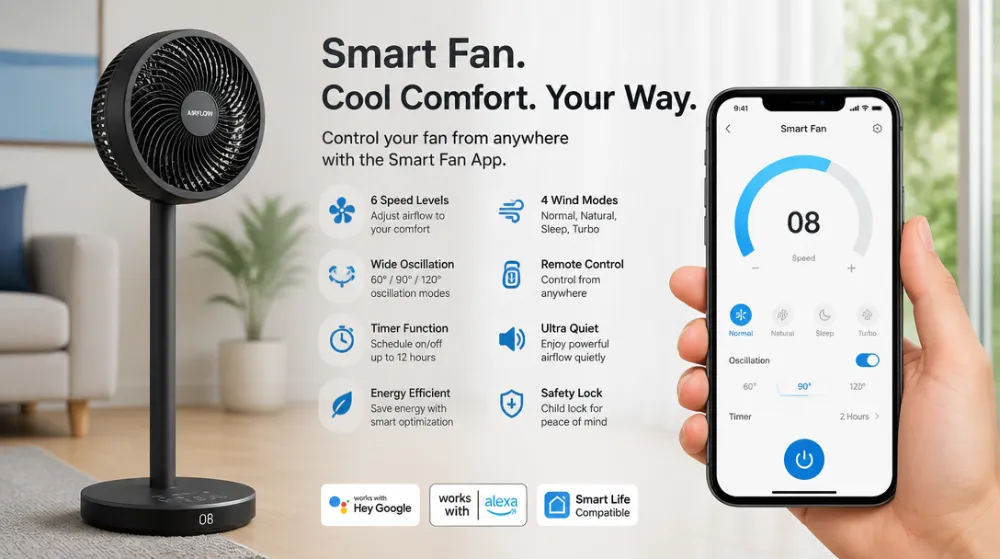
Smart floor fans go beyond simple air movement. They combine robust airflow with intelligent control, automation, and integration into broader smart-home ecosystems. For homeowners, this translates to:
- Precise cooling where you need it most, without blasting the entire house.
- Custom schedules and scenes that match daily routines or climate patterns.
- Remote control and voice compatibility, enabling comfort when you’re not physically present.
- Data-backed adjustments: some models monitor room temperature, humidity, and occupancy to optimize airflow.
From a geo perspective, smart floor fans shine in regions with hot summers, high humidity, or irregular occupancy patterns—areas where traditional fans may be too manual or inconsistent. In the United States, for example, use cases are strongest in the Southeast and Midwest during heat waves, while in Europe, urban flats with limited HVAC benefit from compact, quiet, and energy-conscious cooling solutions. In Canada, smart fans can supplement air conditioning during shoulder seasons, reducing AC cycles and improving overall comfort.
Professional takeaway: A smart floor fan is not just a gadget; it’s a scalable cooling strategy that adapts to room size, occupancy patterns, and climate, while aligning with energy-conscious living.
Key Features to Look For
When evaluating smart floor fans, focus on features that directly impact comfort, energy efficiency, and reliability. Here are the core attributes that matter most:
- Airflow and size compatibility: Look for CFM (cubic feet per minute) ratings that match room size. For a typical living room (180–300 sq ft), a unit delivering 300–800 CFM is common; larger spaces may require higher airflow.
- Variable speed and oscillation: Multiple speed settings plus horizontal and vertical oscillation expand coverage and customization.
- Smart controls: App or voice control, routine scheduling, and geofencing (adjusts when you’re home or away) improve daily usability.
- Energy efficiency: Seek models with energy-saving modes, efficient motors, and low standby power. ENERGY STAR certification in the US/Canada signals efficiency, while CE marking and compliant EU energy standards signal efficiency in Europe.
- Noise levels: Quiet operation matters for bedrooms and study spaces. Look for dB ratings and user reviews emphasizing near-silent performance at low speeds.
- Filtration and filtration-friendly design: Some floor fans include optional filters or easy-to-clean grills. While not a primary driver, ease of cleaning extends longevity and hygiene.
- Smart home integration: Compatibility with platforms like Google Assistant, Amazon Alexa, Apple HomeKit, or popular hub ecosystems helps you build routines and scenes.
- Safety and build quality: Anti-tip bases, stable construction, and child-friendly designs reduce accident risk in households with kids or pets.
- Maintenance and warranty: Filter or grill cleaning ease, availability of replacement parts, and a solid warranty reflect overall quality and support.
Geo note: In regions with plug standard differences, confirm plug type and voltage compatibility. In the US/Canada, most smart floor fans operate on 110–120V; in many European markets, 220–240V models are common. Always verify local electrical standards and warranty eligibility when purchasing.
How Smart Floor Fans Compare to Traditional Fans
Smart floor fans differ from traditional, non-smart models in several practical ways:
- Control and automation: Traditional fans require manual adjustments. Smart models let you program schedules, set scenes, or trigger actions based on temperature, humidity, or occupancy—reducing manual tweaking.
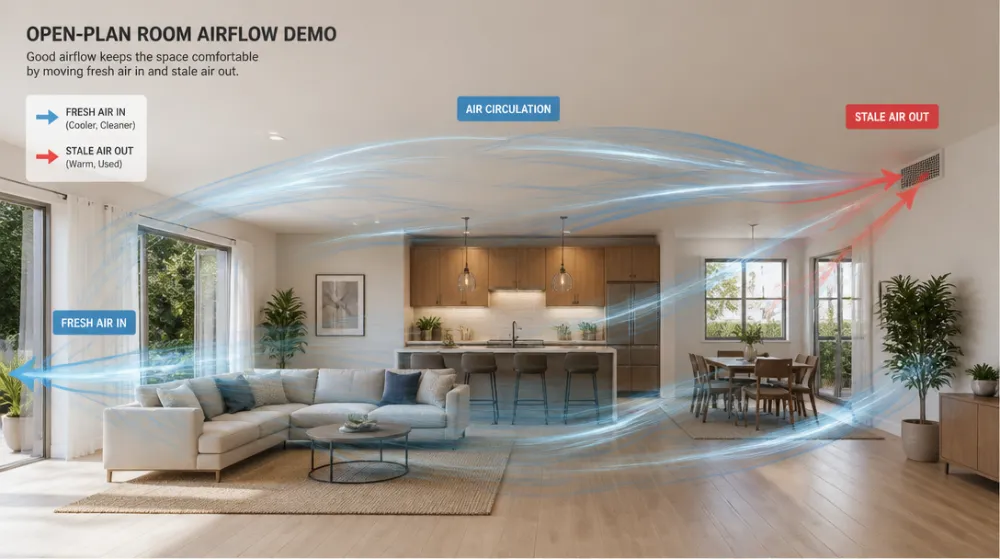
- Zonal cooling efficiency: With smart control, you can cool specific rooms rather than cooling the entire house. This is particularly effective in homes with multiple floors or open-plan layouts.
- Data-driven adjustments: Temperature, humidity, and motion sensors (in some models) help optimize airflow and energy use, which can lower energy costs during hot months.
- Integration and expansion: Smart fans can become part of a broader home-automation strategy, enabling routines that connect with thermostats, humidifiers, or air purifiers.
- Noise and comfort: Many smart fans emphasize quiet operation at lower speeds, especially when used with scheduling or automation to coincide with sleep times.
Geographic relevance: In dense urban areas or regions with high humidity, the ability to automate cooling and reduce peak electricity usage is particularly valuable. In places with mild summers, smart features still offer convenience and long-term savings by reducing unnecessary cooling.
Energy Efficiency and Cost Savings
Energy-conscious homeowners seek devices that deliver comfort without skyrocketing bills. Here’s how smart floor fans contribute to efficiency and savings:
- Lower operating power: High-efficiency motors and optimized airflow paths reduce energy consumption at comparable cooling outputs.
- Targeted cooling: Direct air movement to occupied zones reduces the need to run large HVAC systems or multiple fans at high speeds.
- Scheduling and occupancy awareness: When no one is home, automatic reduction of airflow helps reduce standby energy use.
- Compatibility with energy-saving thermostats or HVAC controls: A smart floor fan can work in concert with a smart thermostat to maintain comfort with minimal energy expenditure.
Regionally, energy costs vary. In the US, where electricity prices differ sharply by state, a smart floor fan may offset a portion of cooling costs in hotter climates. In Europe, where electricity rates are often higher, efficiency and long-term warranty support become even more critical. For Canada, where summer peaks can be brief but intense, a smart floor fan can extend the life of a less aggressive cooling system while maintaining comfort. Refer to local energy guides or utility programs to understand potential rebates or efficiency credits tied to smart cooling devices in your area.
Room-by-Room Setup and Use Cases
Smart floor fans shine in specific layouts. Consider these practical setups:
- Living rooms: Central seating areas benefit from broad oscillation and robust CFM. Use a schedule to reduce fan usage during peak daylight hours when sun-facing windows heat the room.
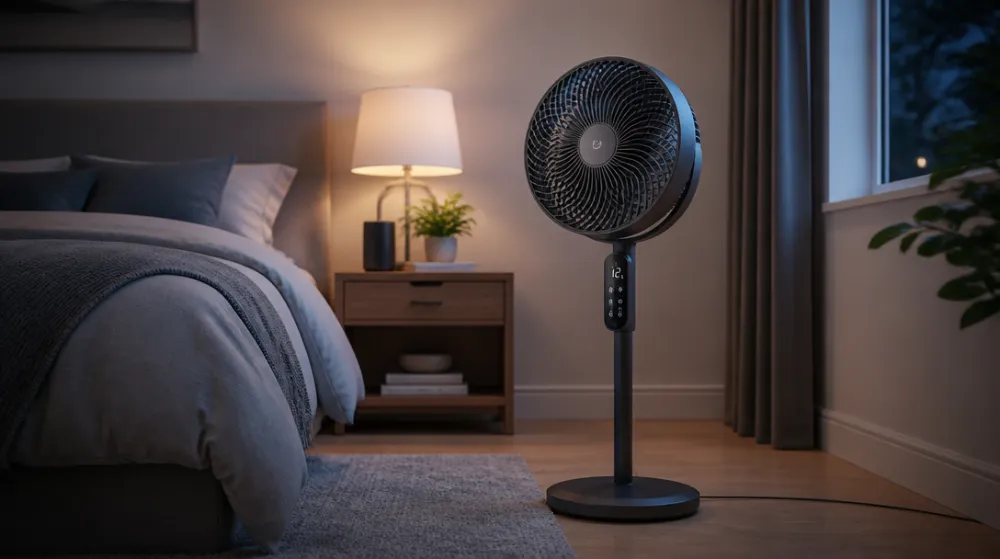
- Bedrooms: Quiet modes, gradual ramp-ups, and night-time sleep scenes improve sleep quality without disturbingly loud operation. Tie to smart lights or a bed-time routine for seamless comfort.
- Home offices: Targeted airflow and low-noise settings help maintain concentration, especially in warmer months or sun-exposed rooms.
- Open-plan spaces: Two or more fans can be synchronized through a smart hub to provide balanced airflow, reducing hot spots.
- Kitchens: High-velocity modes can help direct air away from cooking zones and reduce lingering heat after cooking.
Geo insight: In multi-story homes, consider placing a floor fan on a lower floor facing upward to promote vertical air movement, complemented by ceiling fans or HVAC ducts to handle the upper floors. In compact city apartments, choose a compact model with strong directional control to maximize airflow without occupying floor space.
Choosing the Right Size and Airflow
Selecting the right size and CFM depends on room dimensions, ceiling height, and occupant comfort preferences:
- Small rooms (up to 120 sq ft): 200–400 CFM is typically sufficient; compact floor fans with good directional control work well.
- Medium rooms (120–250 sq ft): 400–700 CFM provides balanced cooling for general seating areas.
- Large rooms (250–500 sq ft and open layouts): 700–1100+ CFM, possibly with more than one unit, ensures even airflow and comfort.
- Ceiling height considerations: Higher ceilings may benefit from higher ceilings clearance or slightly higher CFM to reach the occupied zone.
- Noise and speed trade-offs: Higher CFM often means more noise. Look for models with optimized blade design and sound-dampening features to minimize disturbance.
Practical tip: If unsure, start with a mid-range model and use heat mapping (visualize coverage with a simple room layout) to adjust placement and speed. For rental properties or short-term setups, choose a model with easy portability and a clear warranty to simplify upgrades.
Smart Home Integration and Privacy
A strong smart floor fan should integrate smoothly with your existing ecosystem while protecting user privacy:
- Platform compatibility: Prefer devices that work with your preferred assistants (Google Assistant, Amazon Alexa, Apple HomeKit) or widely used hubs. Multi-platform support increases reliability and reduces the need for multiple apps.
- Local control versus cloud reliance: Favor models that offer local control options or privacy-respecting cloud options. Local control reduces latency and potential privacy concerns when controlling your devices from a phone in the same network.
- Data handling: Review what data is collected (room temperature, usage patterns) and how it’s stored or shared. Look for clear privacy policies and options to disable non-essential data collection.
- Security: Keep firmware updated and use strong, unique passwords for smart devices. Consider enabling two-factor authentication where available.
Geo relevance: In regions with strict privacy norms or data protection regulations, emphasize devices with transparent data policies and strong security practices. For businesses or rentals, it’s wise to document data practices in a local compliance context.
Maintenance and Longevity
To maximize lifespan and performance:
- Regular cleaning: Clean grills, blades, and sensors as recommended by the manufacturer to prevent dust buildup that can reduce efficiency and airflow.
- Check for wear: Inspect power cords and bases for signs of wear or fraying. Address issues promptly to minimize safety risks.
- Firmware updates: Keep the device up-to-date to benefit from performance improvements and security patches.
- Replacement parts: Confirm the availability of filters, grills, and motor parts. A longer spare-parts shelf-life indicates better long-term value.
- Warranty coverage: A solid warranty indicates confidence in build quality. Review what’s covered (motor, electronics, mechanical parts) and any conditions that void coverage.
Regional reminder: In markets with extended humidity or dust exposure, regular maintenance is even more critical to avoid corrosion or performance degradation. Use manufacturer-approved cleaning products and techniques to preserve warranty terms.
Buying Guide: Where to Buy and What to Look For
- Trusted retailers vs. direct-from-brand: Compare options for warranty coverage, return policies, and after-sales support.
- Price vs. feature balance: Higher upfront cost can be justified by longer lifespan, better build quality, and stronger smart features. Consider total cost of ownership, not just sticker price.
- Return policies and trials: A reasonable trial period helps ensure the device meets your room’s needs and noise tolerance.
- After-sales service: Check availability of local service centers, replacement parts, and firmware support in your region.
Geo-enabled tip: Include region-specific calls to action, such as “Find a local retailer in your city” or “Check if your utility offers rebates for smart cooling devices.”
FAQ
1. What is a smart floor fan and how does it differ from a regular fan?
| Feature | Smart Floor Fan | Regular (Non‑Smart) Floor Fan |
|---|---|---|
| Connectivity | Wi‑Fi or Bluetooth, integrates with apps, voice assistants (Alexa, Google Assistant, Siri) | None – controls are limited to the physical knob or simple switch |
| Control Options | Remote app, voice commands, scheduled timers, auto‑mode based on temperature/humidity sensors | Manual speed settings only |
| Automation | Can adjust speed automatically when room temperature rises, sync with other smart devices (e.g., turn on a smart AC) | No automation – you must manually change speed |
| Data & Feedback | Shows real‑time power usage, airflow, and sometimes air‑quality metrics in the app | No data feedback |
| Design | Often includes a sleek base, sometimes built‑in air‑purifier or humidifier, and a more modern aesthetic | More basic plastic or metal construction |
A smart floor fan is essentially a conventional floor fan with added electronics that let you monitor, schedule, and remotely control its operation via a smartphone app or voice commands.
2. Are smart floor fans energy efficient, and can they save on electricity bills?
- Inverter or variable‑speed motors are common in smart fans. They draw only the power needed for the selected speed, unlike older fans that run at full power on high and lower settings that still consume a noticeable amount of electricity.
- Automation (e.g., “run at low speed when temperature < 24 °C”) prevents the fan from running at full blast when it isn’t needed, which directly reduces kWh usage.
- Typical power draw:
- Low speed: 30‑70 W
- Medium speed: 70‑120 W
- High speed: 120‑180 W
(Compared with a traditional 75‑W fan that runs continuously on high, a smart fan can cut 20‑40 % of the electricity used over a typical day.)
- Savings: If you run a 100 W fan 8 hours a day, that’s ~0.8 kWh/day → ~29 kWh/year. With a 30 % efficiency improvement, you could save ~9 kWh/year, roughly $1–$2 depending on local rates. While not huge, the savings add up when you have multiple fans or use them for long periods.
3. How do I choose the right size floor fan for a room, and what CFM should I look for?
a. Match room size (square footage) to CFM (cubic feet per minute)
| Room Size (sq ft) | Recommended CFM Range* |
|---|---|
| 100 – 150 | 1,000 – 1,500 CFM |
| 150 – 250 | 1,500 – 2,500 CFM |
| 250 – 400 | 2,500 – 3,500 CFM |
| 400 – 600 | 3,500 – 5,000 CFM |
| > 600 | 5,000 CFM+ (or multiple fans) |
*CFM is a guideline for air changes per hour (ACH) of about 4–6. For a comfortable breeze, aim for ≥ 4 air changes per hour.
b. Other factors to consider
- Ceiling height – taller rooms need more CFM.
- Insulation & sun exposure – hot, sunny rooms may require higher CFM.
- Placement – a fan that sits centrally or near the heat source works best; avoid corners where airflow can be obstructed.
c. Quick sizing rule of thumb
CFM ≈ Room volume (cubic feet) × Desired air changes per hour ÷ 60
Example: A 20 ft × 15 ft × 8 ft room = 2,400 ft³. For 4 ACH → 2,400 × 4 ÷ 60 = 160 CFM. Most floor fans exceed this, so you’ll be fine with a 1,000‑CFM unit.
4. Can I control a smart floor fan with a smartphone or voice assistant, and is it secure?
Control Options
- Smartphone app – iOS/Android apps let you:
- Turn the fan on/off
- Select speed or mode
- Set timers or schedules
- View real‑time power consumption (some models)
- Voice assistants – Alexa, Google Assistant, or Siri can:
- “Hey Alexa, set the living‑room fan to medium.”
- “Hey Google, turn off the bedroom fan in 30 minutes.”
- Physical controls – most smart fans retain a manual knob/switch for fallback.
Security Considerations
| Concern | Mitigation |
|---|---|
| Unauthorized access | Use strong, unique Wi‑Fi passwords; enable two‑factor authentication in the app if offered. |
| Data leakage | Choose reputable brands that encrypt traffic (TLS) and have clear privacy policies. |
| Hijacking (e.g., malware) | Keep the app and firmware up to date; disable remote access when not needed. |
| Network exposure | Place the fan on a separate IoT VLAN or guest Wi‑Fi network to isolate it from critical devices. |
Overall, smart fans are as secure as the home network they run on. Good Wi‑Fi hygiene and using the manufacturer’s recommended security settings keep the risk low.
5. Are floor fans safe for households with kids and pets, compared to ceiling fans?
Safety Benefits of Floor Fans
- Lower fall risk – they sit on the floor, so a child or pet can’t easily knock them down from a height.
- Visible & reachable – you can see the fan’s blades; it’s easier to supervise.
- No ceiling mounting hardware – no risk of a falling fixture.
Potential Hazards
- Blade contact – if the fan is on a low setting or the grille is damaged, fingers or paws can reach the blades.
- Tip‑over – lightweight models can be knocked over by a curious child or a pet, especially if placed near furniture.
Comparison with Ceiling Fans
| Aspect | Floor Fan | Ceiling Fan |
|---|---|---|
| Installation height | Ground level – easy to see and reach | High up – harder for kids/pets to touch but can be a hazard if a child climbs |
| Stability | Usually stable; may tip if not weighted or placed on uneven floor | Fixed to ceiling, very stable; cannot be knocked over |
| Maintenance | Easy to clean, move, or unplug | Requires ladder or professional cleaning; harder to supervise |
| Noise | Generally quieter at low speeds | Can be louder due to motor placement and blade size |
Recommendations for Safe Use
- Choose a fan with a protective grille and rounded blade edges.
- Place the fan out of high‑traffic zones (e.g., not directly in a child’s play area).
- Secure the base (weighted base or anti‑tip design) if you have active pets.
- Turn the fan off when unsupervised, especially with very young children or pets that like to chew or climb.
Quick Takeaway Checklist
- Smart floor fan = regular fan + Wi‑Fi, app/voice control, automation.
- Energy‑efficient thanks to variable‑speed motors; can shave 20‑40 % off electricity use.
- Size it by room square footage → aim for 4–6 air changes per hour (≈1,000 CFM for a 150 sq ft room).
- Control via phone or voice; keep your Wi‑Fi secure (strong password, firmware updates).
- Safety: floor fans are generally safer for kids and pets than ceiling fans, but use grille protection and stable placement.
Feel free to ask for product recommendations or deeper details on any of the points!
Conclusion
Smart floor fans deliver targeted cooling, convenience, and energy-conscious operation—ideal for modern homes in hot climates or spaces with variable occupancy. By focusing on airflow capacity (CFM), noise levels, smart features, and regional considerations, you can choose a model that not only keeps rooms comfortable but also integrates smoothly with your daily routines and smart-home ecosystem. With careful placement, appropriate sizing, and attention to maintenance, a smart floor fan becomes a reliable, scalable cooling solution that complements other HVAC strategies and reduces energy waste across seasons.